Drinking Music Players Museum
Depending on our mood and weather, we prefer a certain type of music. Sometimes to feel identified with a moment, others to modify the way we feel, or to simply keep us in company when being by ourselves. Melodies have accompanied many of us even before being born. Listening to a song from our past is like traveling in time.
When doing a retrospective of the design products that have had relevance in my life, I realized that because of the relevance of music, the devices that played it were important. Each song and device talks a lot about a specific moment in life. In the following museum, you will get to revive particular moments of human history starting from 1950 all the way to 2018. Enjoy!
60's
Society blaha: Din is a popular choice on business and tech sites. It is ideal for creating titles with impact. Din is a popular choice on business and tech sites. It is ideal for creating titles with impact. Din is a popular choice on business and tech sites. It is ideal for creating titles with impact. Din is a popular choice on business and tech sites. It is ideal for creating titles with impact. Din is a popular choice on business and tech sites. It is ideal for creating titles
Technology blaha: Din is a popular choice on business and tech sites. It is ideal for creating titles with impact. Din is a popular choice on business and tech sites. It is ideal for creating titles with impact. Din is a popular choice on business and tech sites. It is ideal for creating titles with impact. Din is a popular choice on business and tech sites. It is ideal for creating titles with impact. Din is a popular choice on business and tech sites. It is ideal for creating titles

Yam
Year:
Author:
Tech:
50's
Technology
During the late '40s and the' 50s, people from all over the world were working on ideas and experimented with materials that shaped today's computing technology. An example of this is the creation of the first working transistor and the use of silicon as a semiconductor material. These two will become protagonists on how personal devices to listen to music revolutionized in the future.
Social
The '50s are marked as the era after world war II, the beginning of the cold war, and the decade with the largest number of babies born. This last event was a key factor for society to relate women as the responsible of the household and raising children, leaving a feeling of unfulfillment in women who pursue a different kind of lifestyle. A relevant phenomenon in the music industry of this year was the start and “End” of Rock-and-roll, which was a kind of music that was targeted to teenagers. Adults were not happy about this, they related the music as a way to corrupt youth. By the end of the decade, in 1959, three relevant rock n roll musicians died in an airplane accident, and Elvis Presley went to the US Army, this situation marked the end of the Rock and Roll era.
Design Movement
People felt more relaxed in this decade and also did art movements, like pop art. Which focused more on the external factor of society than making an introspection of the individual. You can also see the influences of the streamline style, which was characterized by using aerodynamic shapes and new materials and processes to make products more accessible to people.
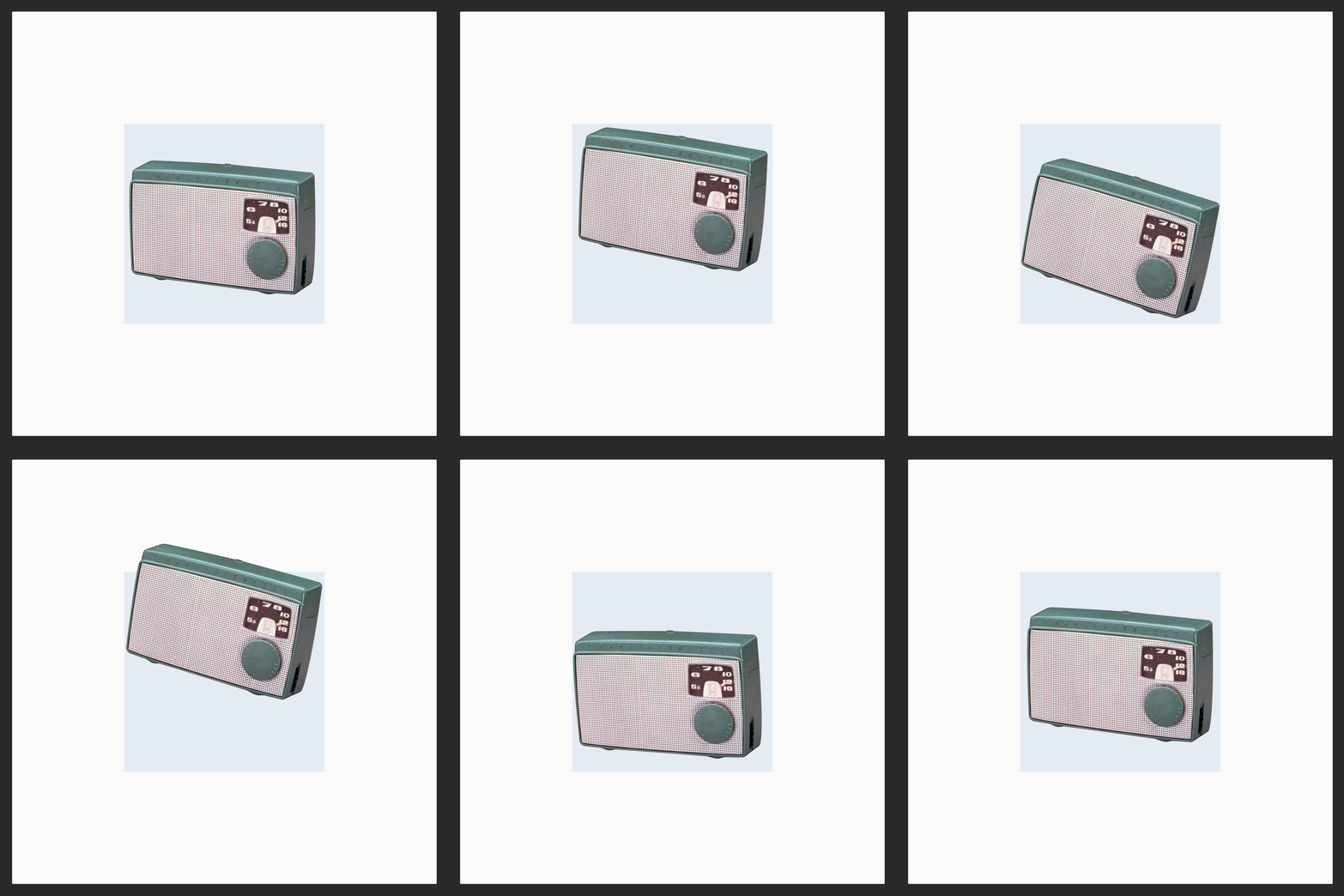
TR 55
Technology: Transistor Radio
Year: 1955
Company: Sony
Country: Japan
Size: 140mm x 89mm x 38mm
60's
Technology
Theodore Maiman creates the ruby laser, which becomes a relevant technological advancement for CDs. The compact cassette was introduced in 1964. And, the first man landed on the moon.
Social
The '60s were a time with big social changes, especially due to the breaking of many social norms and taboos related to, music, clothing, sex, and drugs. An example of this is the mini-skirt, the gay rights movement, and artists who were making new music influenced by the use of psychedelic drugs. The Beatles released their first album and became the musical heart of the decade. Other relevant music styles were girl groups, surf rock, novelty pop songs, clean-cut teen idols, and Motown music.
Design Movement
Pop Art's influence extended till this decade. And also new forms of expression were born like; conceptual art, which gave more importance to the meaning than the technique of the piece of art; The psychedelic movement with color inspired from the pop art movement, abstract swirls, and curvilinear typography; and also the minimalist movement that was completely the opposite, with simplistic shapes and hard edges exposing the nature of the materials.
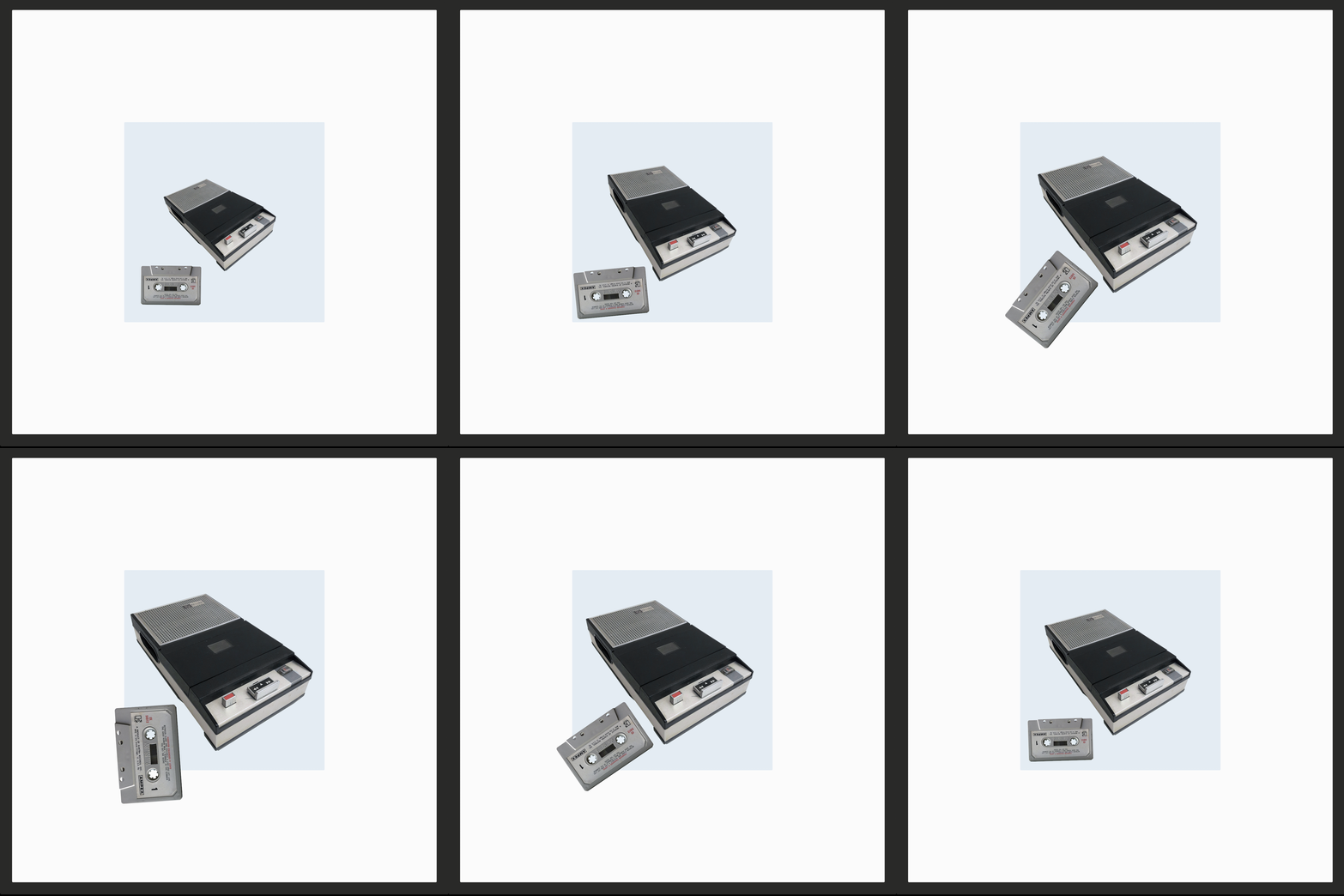
THE 3302
Technology: Mono compact cassette recorder
Year: 1967
Company: PHILIPS Electronics
Country: Austria
Size: 200mm x 115mm x 55mm
70's
Technology
It was the transition to digital technology, an important development was the Discrete Cosine Transform (DCT) which after a few years permitted audio compression such as MP3. The Home computer was introduced and the apple company was founded in the mid-seventies.
Social
Punk music took the place of hippie music, new rock groups like Led Zeppelin appeared, the rise of disco music in the mid-seventies, experimental classical music influenced both art rock and progressive rock genres with bands such as Pink Floyd. In the late seventies, the first Star Wars movie is released and inspires a massive pop-culture phenomenon, and one year after, Grease, starring John Travolta and Olivia Newton-John.
Design Movement
Minimalism was a design style that lingered through this decade, while at the same time a new movement was flourishing. Postmodernism was challenging the "less is more" way of approaching design and was critical of the modernism approach.
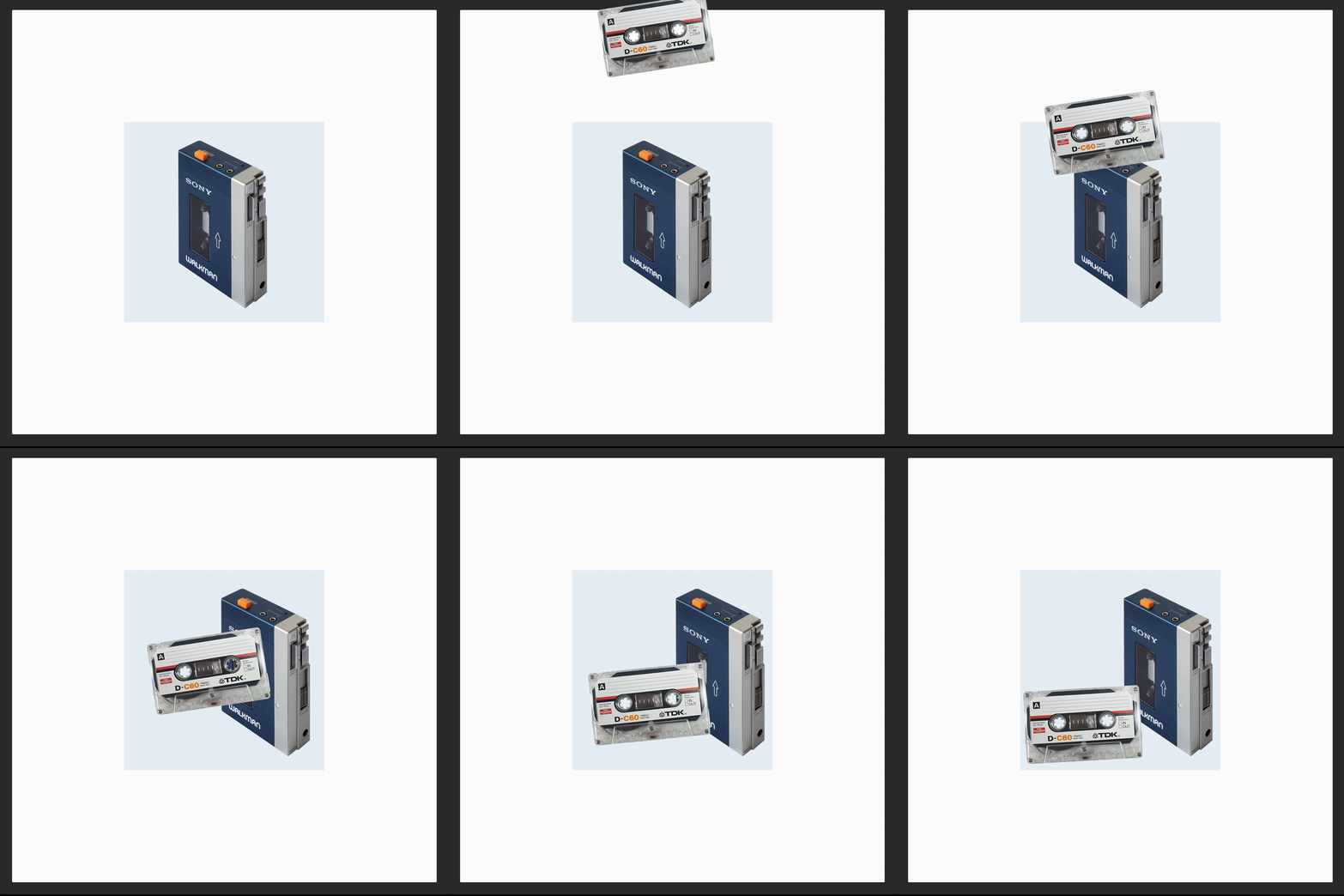
Walkman TPS L2
Technology: Cassette tape player
Year: July 1979
Company: Sony
Country: Japan
Size: 150mm x 90mm x 35mm
80's
Technology
The digital format of optical compact discs gradually replaced analog formats. Computers became more common in the household, schools, and businesses. Even though walkman and boomboxes were invented in the '70s, they became popular and were introduced to many countries in the early eighties. They both had a profound impact on the music industry and on youth culture. This was also the era of the dual cassette tape deck, people could copy tapes and put together their own mixes
Social
“Yuppies '' were baby boomers that were having a successful career but, even though they had a college education, a well-paid job, and can allow themselves some luxuries, weren't sure they were happy. MTV shaped popular culture, artists were able to express their creativity and obtain bigger exposure, and music videos became popular. Hip-hop, house, and electronic music emerged, and punk rock and death metal became more popular.
Design Movement
The Memphis design aesthetic was the heart of the design movements of the '80s, it not only changed the aesthetics of furniture but also influenced fashion and graphic design, offering bright and colorful pieces. Another type of design that became common during this decade, and was originated mainly because of the personal computer, was skeuomorphism elements on icons, to make computer usage more intuitive.
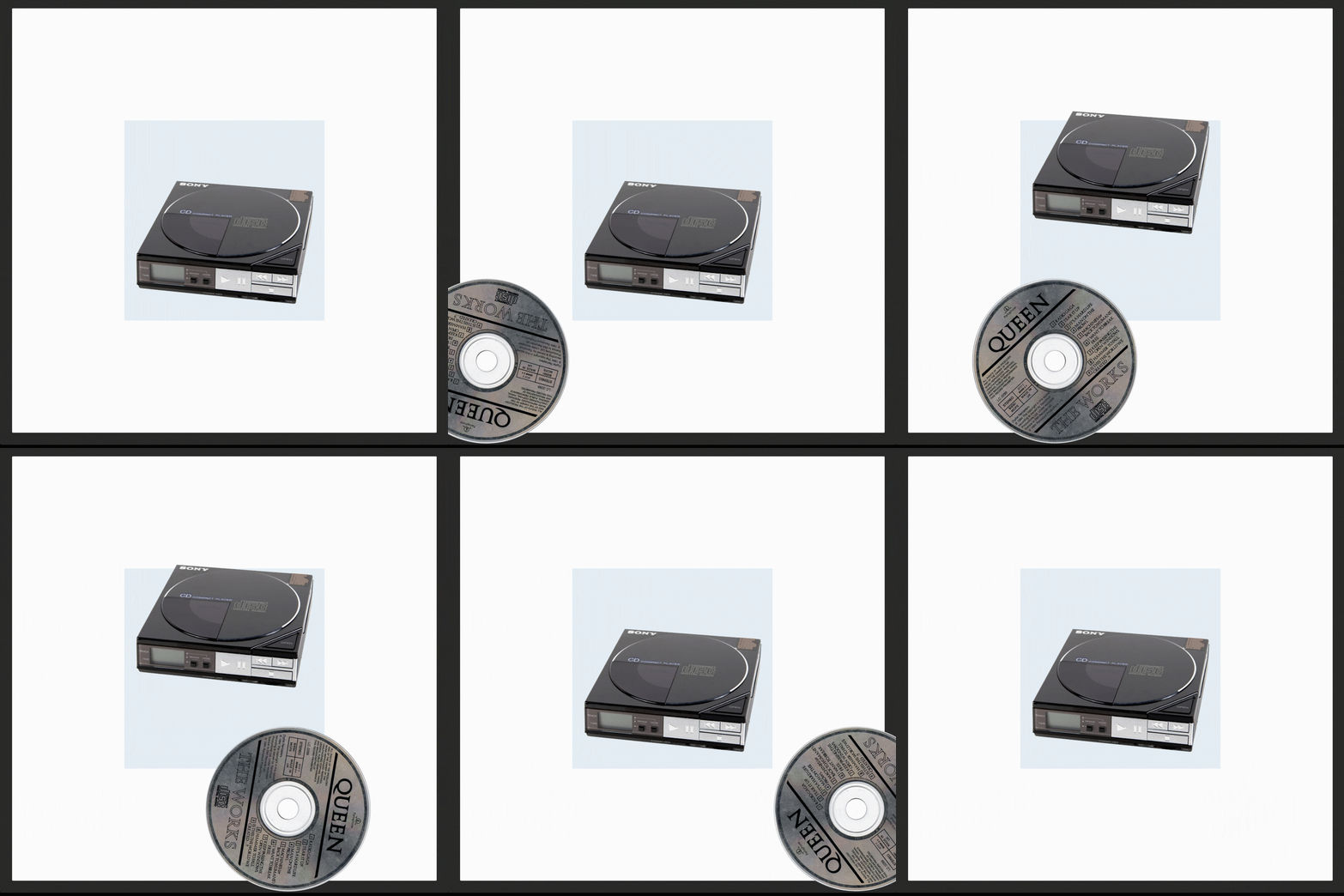
Discman D 50
Technology: CD Player
Year: 1984
Company: Sony
Country: Japan
Size: 127.5mm x 42mm x 133mm
90's
Technology
The internet reached new places in a rapid mode, and soon became part of the mass culture. It became a starting point to design new platforms for communication like ICQ, and MSN Messenger, and music downloading like Napster. The first MP3 player, MPMan, was released in the late nineties but wasn't a big success. The CD-ROM drive became popular for most computers and CD burner drivers were introduced. So, the portable CD players that were launched in the late eighties became popular during the nineties.
Social
As a consequence of online messaging platforms, “netspeak” was born, with short versions of phrases like brb (be right back). Grunge, rave, and hip hop movements spread to other parts of the world thanks to the internet. Other types of music like boy bands, girl power music became popular. The third wave of feminism arose and WHO removed homosexuality from its list of diseases.
Design movement
In the nineties, Grunge aesthetics were dominating fashion, graphic design, and also music videos, the main characteristics were distressed textures, unrefined edges, and apparently non-approach to the layout.
skeuomorphism elements on icons continued to facilitate tech UI. Another type of form that was very common in product design where Blobjects, which is the excessive use of organic shapes to make products seem fresher, friendlier, and simple.
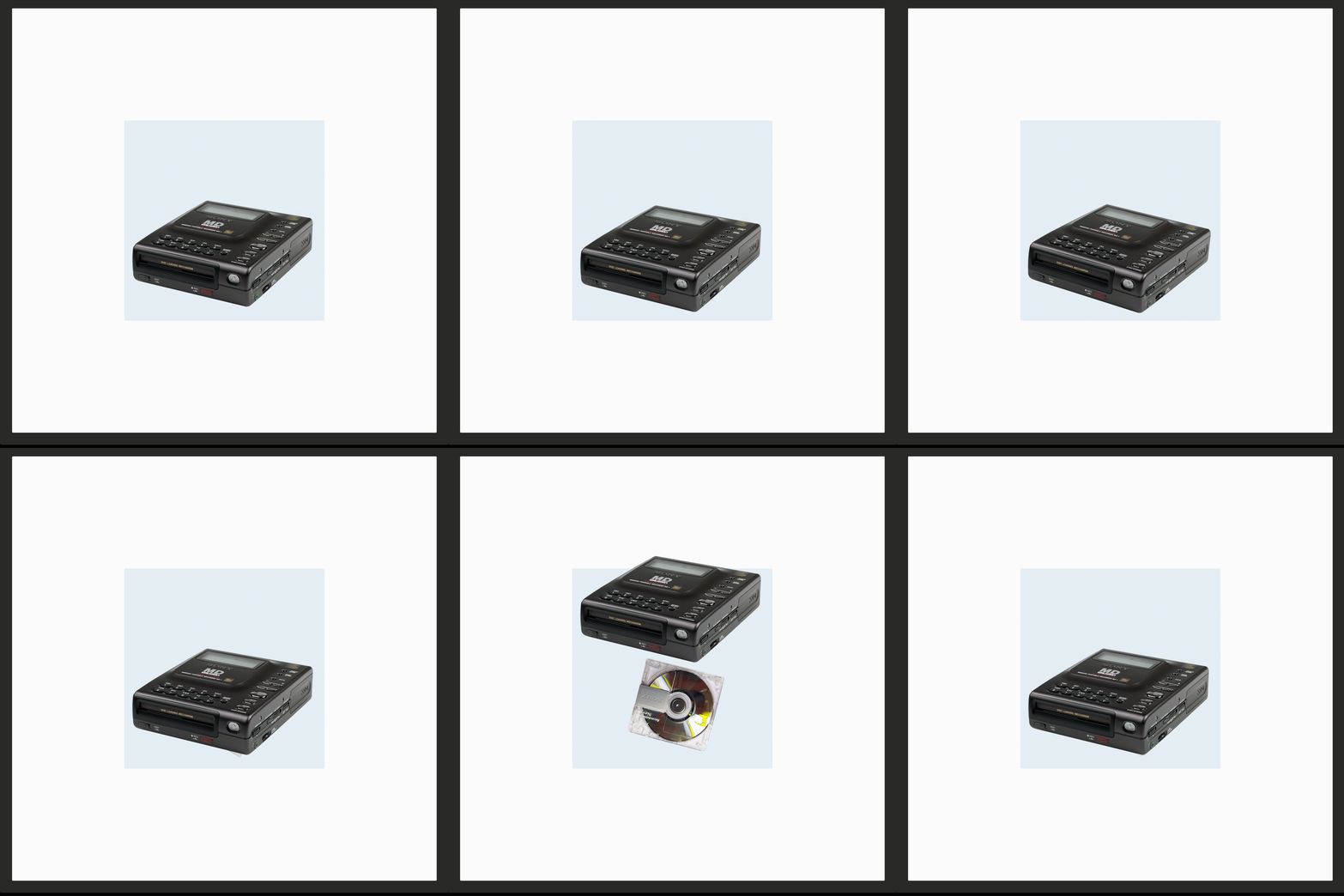
MZ 1
Technology: Minidisc Player
Year: September 1992
Company: Sony
Country: Japan
Size: 114mm x 139mm x 43mm

Rio PMP300
Technology: MP3 Player
Year: 1998
Company: Diamond Multimedia
Country: USA
Size: 88.9mm x 63.5mm x 15.8mm
00's
Technology
Radio became less listened to because of MP3 players, and not only the radio is affected, also sales of CD decrease. On the other hand, satellite radio receivers allow listeners to pay for a subscription in order to listen to free-ad music, thus many radio stations started streaming their content on the internet. Home automation and home robotics advance in North America.
Social
The Internet facilitated artists to distribute their music at a lower cost without necessarily needing the financial support of a record label. Uploading and downloading unlicensed songs on the internet became mainstream and affected the music industry sales. Electronic music raised in popularity, and some post-punk bands like The Strokes and The Killers too. The main impact that the two thousand created on the music industry was around music distribution.
Design Movements
Logo design became a focus for many graphic designers during this decade, many people started valuing the quality of the brand and logo to judge the future success of a company, especially in tech brands like Google, Twitter, and Facebook. Computer-aided design became a necessity.
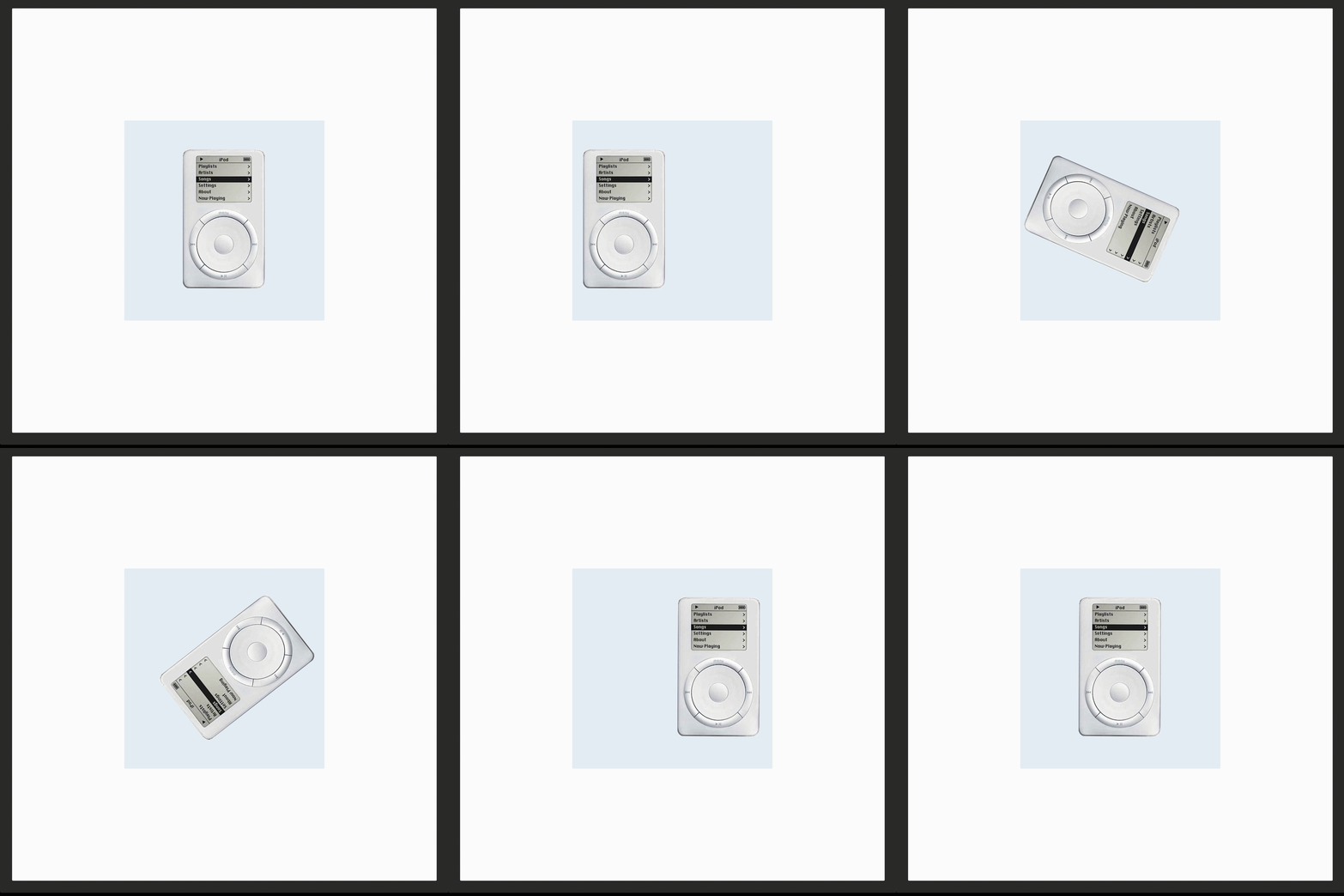
iPod Classic 1st
Technology: MP3 Player
Year: 2001
Company: Apple
Country: USA
Size: 102.1mm x 61.7mm x 19.8mm
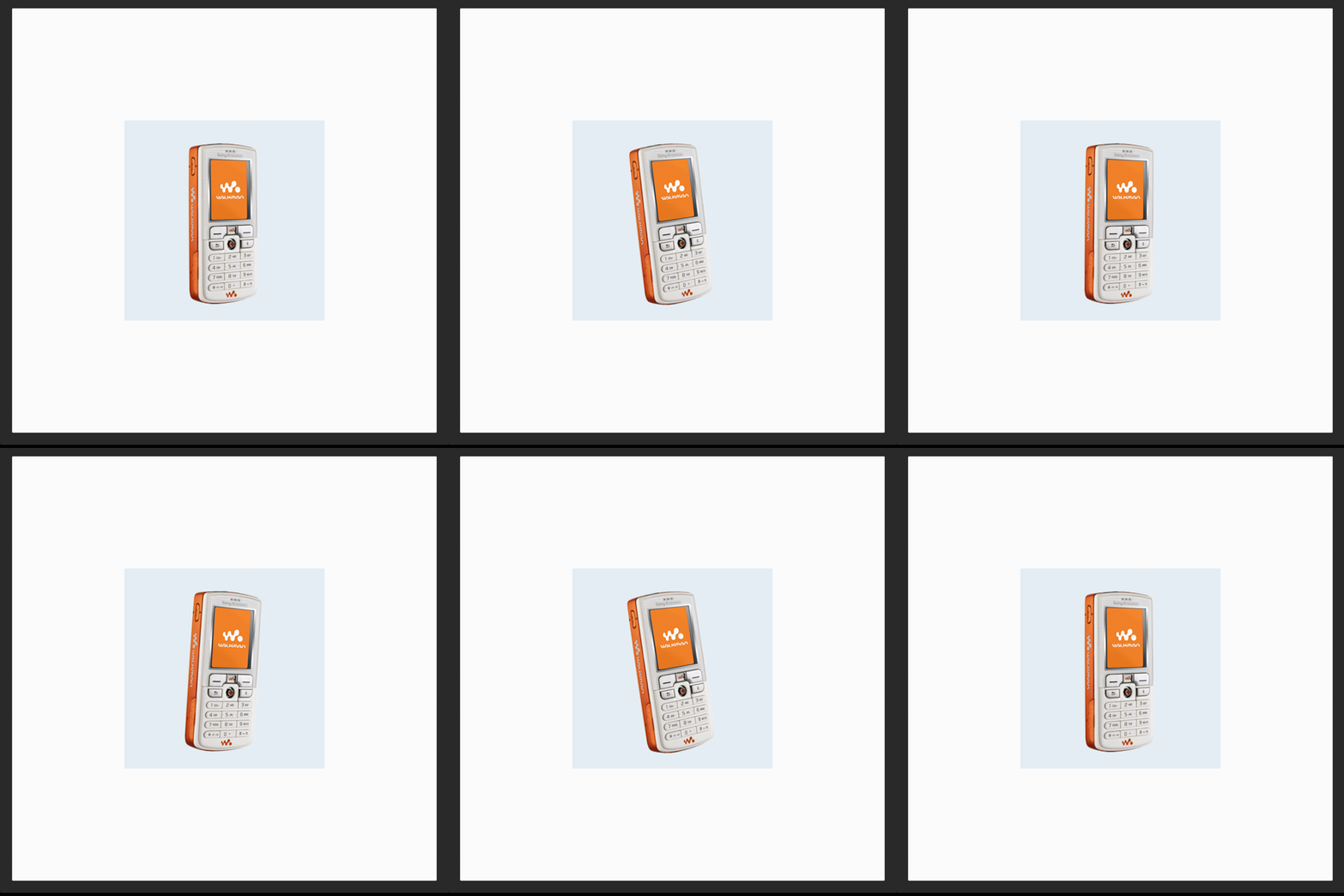
Sony Ericsson w800
Technology: Phone + Music player
Year: 2005
Company: Sony
Country: Japan
Size: 1oo mm x 46 mm x 20.5 mm
10's
Technology
The Internet was now available wirelessly, combined with cloud computing became the fuel for infinite possibilities of technological advancements, especially related to IoT, big data, and artificial intelligence. Many new devices started surrounding people's daily lives like smartwatches, virtual assistants (Siri & Alexa). And smartphone manufacturers are investing in launching smartphones with flexible and foldable displays.
Social
Increased demand for variety and personalization in music streaming services like Spotify and Apple Music created many subgenres of music. Online social movements gaining a big impact during this time, with the help of hashtags news reach more people, main social movements include Me too and black lives matter. Another worry of this decade is the increases in life expectancy and fall in birth rate leading to larger proportions of the population being elderly, therefore, aging and the environment became a topic of greater public concern around the world.
Design Movements
One of the main design movements of the 2010's decade is flat design. It started as a way to make UI for web pages and mobile apps cleaner. Its main characteristics are minimalistic icons with no depth, uses neutral tones and straight lines. Other styles that became popular were vintage, folk, and hipster.
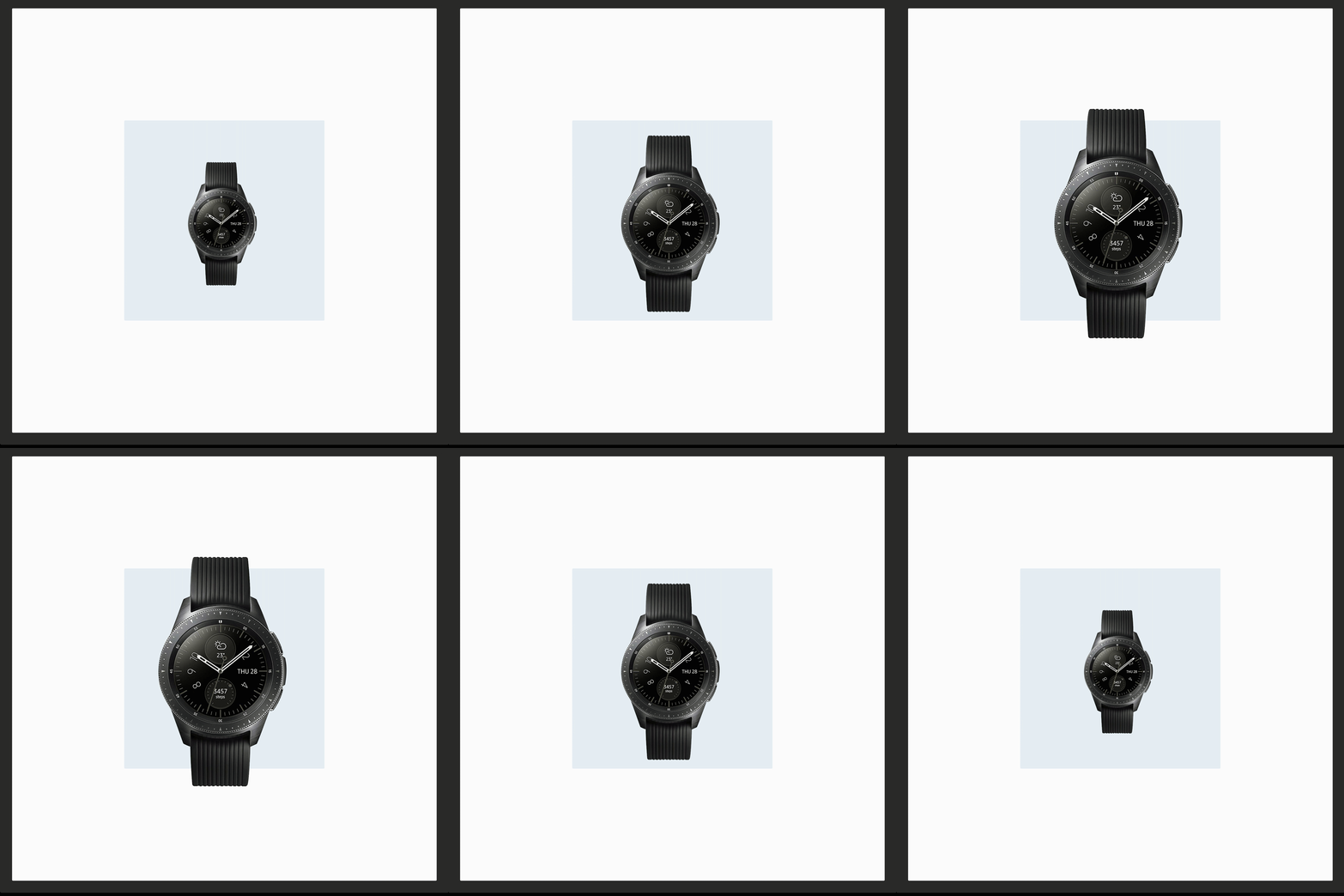
Galaxy Watch LTE
Technology: SmartWatch + Access to music streaming
Year: 2018
Company: Samsung
Country: Korea
Size: 49mm x 46mm x 13mm
Today &
tomorrow
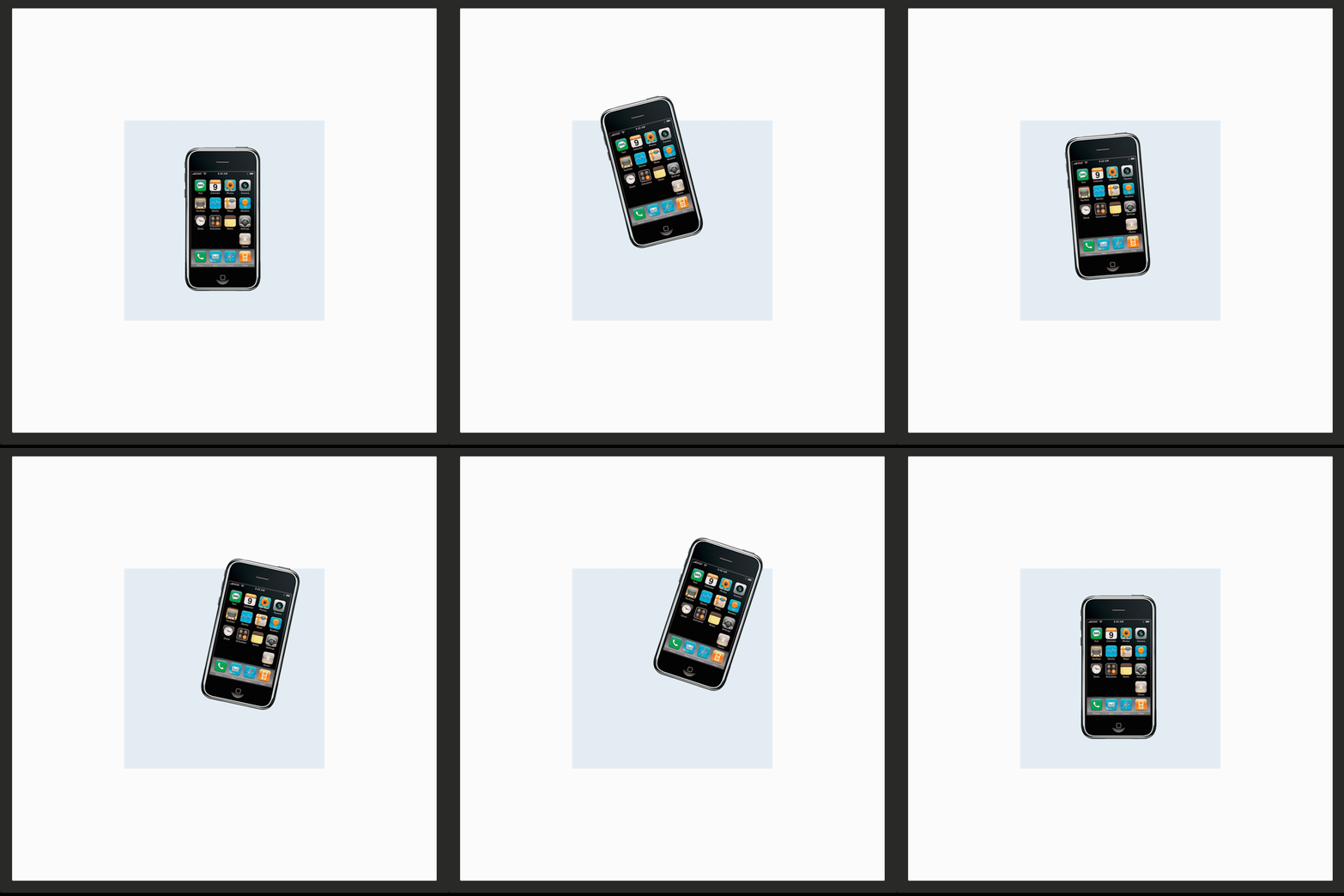
We can practically hear music on any device that has access to an internet connection, enabling us to reach any song that comes to mind. Personal devices to listen to music have become smaller and with less specific functionality, as it has been since 2007 when the first smartphone arrived and now with some smartwatches. Another important thing that changed, is the detachment of analogous elements that contained the music. The first big shift was when MP3 players entered the market and people no longer had to buy CDs or Cassettes to own the music, people just needed to download to have it. Now tracks do not even have to occupy a space in our devices, it's all in the cloud and a connection to the internet is enough (in case you don't pay membership in music listening platforms). The downloading or having a physical object like a disc, to feel you own the song has been substituted by adding your favorite songs to virtual playlists.
Music players like Spotify and YouTube already have algorithms that depending on our music listening history, the hour of the day, and the weather recommend tracks that we might prefer. If smartwatches become more popular and better developed, the access they have to enormous amounts of data about our activities and levels of stress will be key for the music listening experience. I dare to speculate that this combined with the rise of AI-powered technologies will make our devices able to choose the best track for us without doing any effort or why not, even create the perfect melody with personalized lyrics about our own experiences and memories.